
Enough Compassion?

Enough Compassion? (#31)

I recently spent several hours in a hospital emergency room (I’m fine, by the way!). I dreaded it, but the triage nurse at my medical clinic, and my husband, demanded that I go. I hate ERs – the wait time is usually long and unpredictable, the price tag high, and my particular ailment didn’t seem acute enough to warrant this waste of time. My husband, however, was not going to let me off the hook. So, begrudgingly, I packed a bag of reading material, phone charging cable, my trusty laptop, some almonds and a bottle of water, and I headed to the hospital. It was already nearly 7 PM, so I braced myself for a long evening.

There were quite a few people waiting when I arrived, and more trickling in every few minutes. Not to mention the ambulance bay’s steady stream of arrivals with more acute patients. A beautifully colorful, albeit tragic, sea of hurting humanity. We were all clearly not having our best day. People were injured, sick, in pain, fatigued, and impatient. I overheard a bit here and there – a sports injury, a bad chemo reaction, a terrifying cough. The staff seemed to be working as expediently as possible, but still the wait time was long and some of the patient’s patience was short.

As I sat in the cramped waiting room, complete with the plexiglass barriers between each seat, I wondered about all of the stories in the room. Who were these people and what had happened to bring them here? I wondered about their childhood and their families. Due to COVID-19, most people were not allowed to have a visitor accompany them and I wondered if they felt alone. I wondered about their support system and if they would be okay. How did they get here, how would they get home? I wondered if they felt loved and if they knew Jesus.

By contrast, the staff were wonderful and professional. I realized that they have a unique position from which to see the very worst parts of the human condition. Though I’m sure they’ve seen it all, they approached each person and each case with such kindness and care. I was struck by the depth of compassion one would need in order to see so many people at their worst – day in and day out – and yet remain so gracious and kind.

It made me think that far too often we don’t extend enough genuine compassion to one another. I suspect we make assumptions about one another – and our ignorant paradigms are full of subtle accusations about what people deserve and what they did to warrant their conditions. I grieved at the thought.

Scripture says that when Jesus saw the crowds, He was filled with compassion because of all of their needs (Matthew 9: 36). Sitting there I realized that while I don’t know every story, Jesus does. And He loves them deeply. He created each one and knows them by name. While He would be the one qualified to rightly accuse and condemn, scripture also says that is not His purpose (John 3:17) and that in Him there is no condemnation (Romans 8:1).

So, since I had the time, I turned my attention to prayer – for both the incredibly compassionate workers and the hurting ones who needed them.

This week:

Consider areas in your life where you could be more compassionate. What paradigms or assumptions do you have about others, whom Jesus loves? Consider how you can be the compassionate hands, feet, and heart of Jesus to the hurting world around you.


What I Love About Tiny Houses (#29)

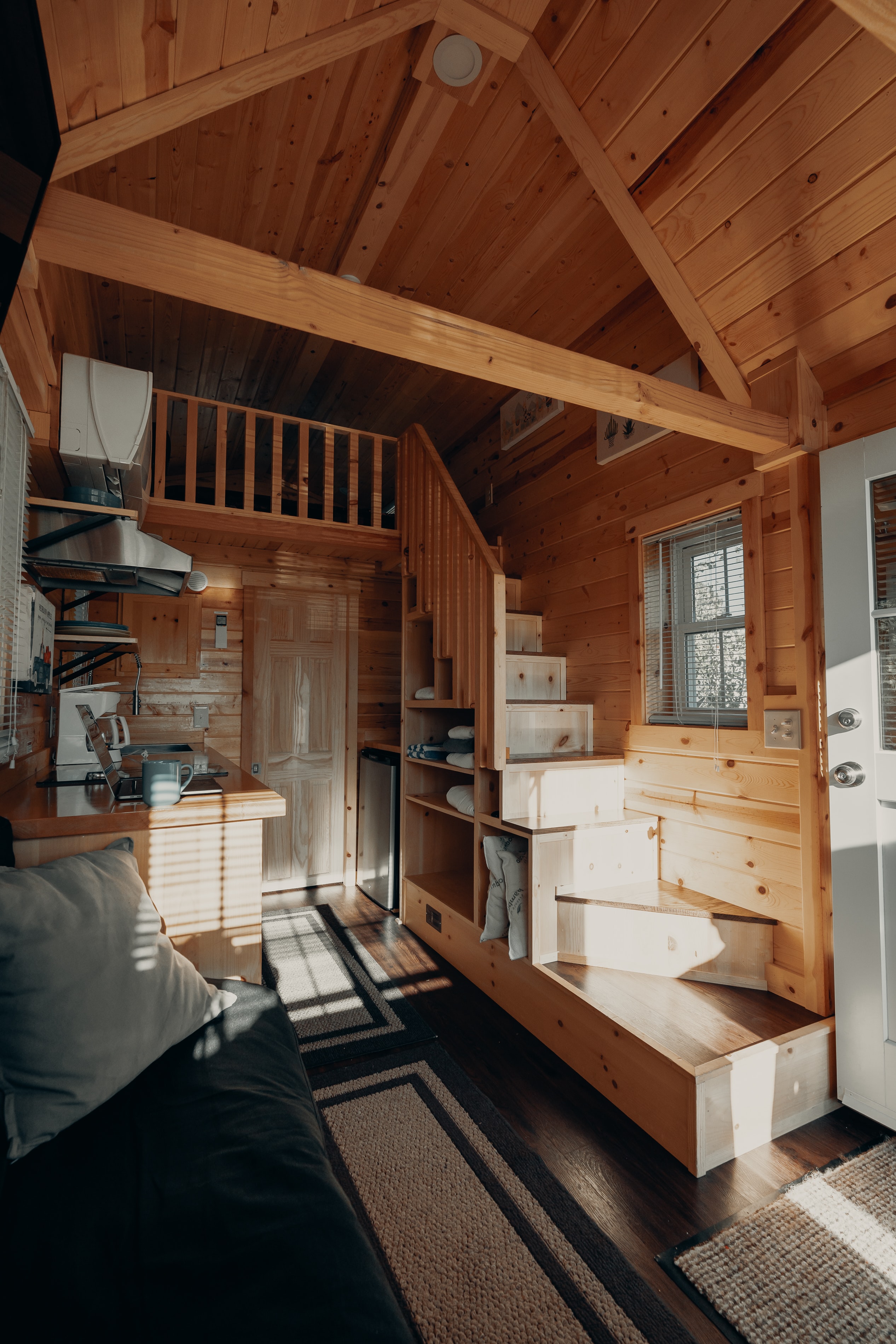
I love tiny houses. I think they’re adorable, clever, creative, and bold…and I admire those brave enough to choose the tiny house lifestyle. While environmental sustainability is an admirable draw, I think the tiny house movement really represents individuality and freedom.


Tiny houses are customizable to the unique lifestyle and personality of the homeowner. If you love to cook, then invest in a bigger kitchen. Like to entertain? Add a rooftop deck and modular furniture. They can be smaller and easily mobile or larger and mostly stationary. Tired of packing your suitcase? Leave the suitcase behind and take your whole home on the road.


Tiny houses are a great example of living the Enough Life. Just like the Enough Life, tiny houses are not about sacrificing, they’re about optimizing. It isn’t about giving up space, it’s about gaining what’s truly important to the owner. What the homeowners choose to give up in terms of the tangible square footage they more than make up for in the intangible benefits – less stress, more freedom. Tiny houses allow the owner to have more of the freedom they truly value – financial freedom, freedom to move about the country or stay put, freedom to customize.


I’m not suggesting that tiny house living would work for everyone, but the principle remains for all of us to consider: What is the intangible cost of the tangible items that make up your current lifestyle? Is there any material thing in your life that costs you more to maintain than the benefits you receive? If so, consider downsizing that one thing.


People Pleaser or Principle Pleaser? (#28)

Are you a people pleaser? To some degree I think everyone struggles with this, at least a bit. We want to be liked. We want to have friends. People generally don’t want others to think negatively about them. And most of us would like to avoid unnecessary conflict. I get that. Yet, you really aren’t being your authentic self if you go through life trying to please other people.

In life, and certainly in any leadership capacity, you will not please everyone all the time. Jesus said, “Woe to you when all the people speak well of you and praise you, for their fathers used to treat the false prophets in the same way” (Luke 6:26, AMP). Now that’s a serious warning. I think Jesus was saying that when we chase the approval of others, deception is certain. When all people are happy with you, someone is lying – either you are not being honest about who you are and what you believe, or some of the people are lying by agreeing with you.

Our courage and conviction must be rooted in something other than what people think of us. That is not to say we should strive to be disliked. But in these days of moral relativism, there must be a higher purpose – a greater principle – that serves as our compass. Instead of being people pleasers, perhaps we should be principle pleasers.

I love how the Amplified Bible translates Psalm 144, verse 1: “The wise woman builds her house [on a foundation of godly precepts, and her household thrives], but the foolish one [who lacks spiritual insight] tears it down with her own hands [by ignoring godly principles].” I don’t want to be a foolish woman who ignores godly principles. I want to live an authentic principle pleasing life. Among other Christian principles, I would list the following:

  • Live generously.
  • Deliver truth with grace.
  • Show compassion.
  • Choose kindness over niceness.
  • Be authentic.
  • Do the right thing, especially when it’s hard.

Proverbs 29:25 (NLT) says, “Fearing people is a dangerous trap, but trusting the LORD means safety.” I decided a long time ago that I would not fear people, only God. And that has shaped my life in many ways I could not have imagined.

How about you, have you ever thought about the principles that govern the way you live? Consider making a list of them this week. You just may find yourself more interested in authentically, albeit imperfectly, following your principles, rather than chasing the approval of people.


Photo by Jeremy Bishop

Good Courage. (#27)

Courage is a funny thing. It’s kind of like patience. It’s a trait you only know you have if it’s truly tested. And no one ever wants to take that test.

David, long before he became the most famous King in Israel, showed incredible courage by facing the giant Goliath. We often think of courage like that, facing the giants in life, doing the heroic deed. However, I think courage most often shows up in much more subtle ways.

Perhaps courage is best demonstrated in the bravery of the every day, the painful mundane:

  • Healing from a miscarriage
  • Managing anxiety and fear
  • Enduring medical treatments and tests
  • Working through depression
  • Helplessly watching your child’s tragic choices
  • Being a single parent
  • Persevering amid recurring physical pain
  • Surviving a devastating loss
  • Keeping up with the drudgery of life
  • Pressing on when things in life didn’t work out like you expected…at all!

Walking through life in the midst of struggle and pain takes courage, some would even say good courage. The apostle Paul, while walking out his own daily struggle, said “So we are always of good courage. We know that while we are at home in the body we are away from the Lord, for we walk by faith, not by sight.” (2 Corinthians 5:6-7 ESV)

In a previous post, Good Enough, I mentioned that Jesus said no one is good except God alone (Mark 10:18). Jesus’ half-brother James also says that “every good gift and every perfect gift is from above, coming down from the Father of lights” (James 1:17 ESV). In other words, only God is good and therefore all good things can only come from God.

So then, what is the “good courage” to which Paul refers? Consider that when we walk by faith in God, with God, we have access to His goodness. Scripture records numerous places where God told His followers to be strong, to be courageous, and to remember that He is with them. Perhaps that is what makes courage good. We bring the faith and the willingness to try and God brings His presence, His goodness, to the equation.

Sometimes life just takes courage. Oh sure, there are big, pivotal moments that take courage. Yet, the real courage, good courage, is getting up and getting back in the fight day after day. Facing the pain and loss, the heartache, the despair, and clinging tightly, in faith, to that which is Good.

How are you demonstrating good courage these days?


Mask Photo by Tamara Gak

Take Off Your Mask (#26)

Over the past year we have been wearing masks – face coverings – in an attempt to protect one another from illness. Some people feel safer and more protected wearing them, others feel inhibited. Still, I can’t help but wonder if everyone feels more invisible wearing a mask. I know I do, and sometimes I actually like it. I have enjoyed walking through the grocery store lip synching to my play list without anyone noticing and yawning without covering my mouth. Regardless of the efficacy or freedoms at stake, I believe the masks are a barrier to our human connection. Face coverings impede our ability to convey nonverbal sentiments, recognize one another, and even convey a simple smile. I think the physical masks prevent us from truly seeing each other.

Many times during these months of mask mandates, I have thought about a different kind of mask. One that we have all worn most of our lives without objection, our metaphorical masks.

These metaphorical masks are used to camouflage and cover up. We aren’t born with this mask, but we learn pretty early in life that we need this mask for protection. You see children aren’t born with the innate sense of self-doubt. They are predisposed to expect love, acceptance and nurturing. So, when criticism comes – especially when it comes early – we start to stitch our masks.

Each criticism, each word of condemnation, causes us to want to hide our authentic self. Even if we know that the criticizer is wrong, still we try to hide that part of us that may be vulnerable to attack. Over time, we become so used to wearing this metaphorical mask that we forget to ever take it off. We smile, we put on a good front, and we say “fine” even when our life feels far from fine. We lose touch with the truth of who we are, our most authentic selves. We put on the mask and cover up, hoping others won’t see the real us.

What if we decided to take off our metaphorical masks? What would happen if we started, albeit slowly and with those we feel most safe, to be our authentic self? What if we stopped filtering everything through what we thought other people would think or how they would respond?  What if we got real with one another? I know this can be scary. It is a risk.

Life can be hard, and life can be lonely. We all need people, our people. People who understand us, encourage us, and are for us. Some people will like the authentic you. But some will not…and that’s ok, that just means they apparently aren’t your people.

This week, I encourage you to think about your authentic self. Who are you really, at your true authentic core? Consider who you really are when no one is watching, and consider whether that describes the person you want to be? Then, find even one small area that you can begin living with authenticity.

And while you’re at it, consider how you can also leave space for others to be their authentic selves too.