Let's Thrive Not Strive in 2025!

From Stuff to Enough. (#51)

When I wrote July’s article on the topic of freedom, I had no idea that I was about to embark on my own process toward a form of unexpected, and at the time unwanted, freedom. Since then, I’ve had a fresh opportunity to walk the talk as I was forced to once again live out every blog post and article I’ve ever written, every topic I’ve ever taught, and every prayer I’ve ever uttered asking God to make me more like Jesus.

My life changed in an instant, and many of the days and weeks that followed were consumed with paralyzing shock, sometimes crippling overwhelm, and layers of previously unimaginable grief. It was a journey, walked moment by moment, while leaning into my place of “enough.” I needed to focus on navigating all that was happening and maintain my sanity in the midst of the storm; thus, my silence for the past few months.

This season required a move from a very full 3,000 square foot home into a lovely but much smaller 1,200 square foot apartment. I only had two days to pack up all my worldly possessions. Things passively accumulated over decades now demanded rapid-fire decision-making…what to keep, what to give to family and friends, what to donate, and what to trash. The word overwhelm doesn’t come close to what I experienced. The purge was real…and real fast. I spent a half century accumulating things, which now I simply could not take with me.

I prioritized keeping only the items which truly add value to my life and which I have recently used. Several carloads of items were donated, dozens of bags of trash, and even several boxes of donation-worthy items ended up in the trash out of sheer exhaustion and lack of time.

I thought about all the money I spent on this stuff and all of the hours I worked to pay for it. Gone.

Two friends were simultaneously in the process of moving their respective parents from their long-term homes into assisted living facilities. They too lamented being inundated by stuff accumulated over the years: items their parents thought would be useful again one day, grow in valuable someday, or be coveted heirloom items. Yet here they were, sifting through a lifetime of stuff and making decisions about what was enough, just like I was.

Some of the stuff was “just in case I ever need it” items. Some were “when I get around to doing this” items. Some were sentimental. Some items were graduate school textbooks that I thought I might refer back to someday. Some were clothes that I realistically won’t ever wear again. All of it was taking up physical and mental space in my life. Oh, there was value in some of the items…just not much value for me anymore.

On the other side of all that madness, I had to ask myself some very pertinent questions:

  • If I never got around to using it, was it worth buying?
  • If I never got the book read, did I really need to spend the money on?
  • What was the cost (financial, mental, storage space) of carrying this inventory of stuff – buying it, storing it, cleaning it, moving it, etc.?
  • Is there an underlying fear of lack associated with the accumulation of things or a reticence to part with them?
  • Do I own things, or do my things own me?

Jesus taught that we should invest in what moths and rust cannot destroy. Like building authentic relationships, loving one another well, and carrying one another’s burdens. He taught that we should be generous with our time, talents, and treasures to help spread the good news about Him and to help those with fewer financial resources.

Jesus said, “Don’t store up for yourselves treasures on earth, where moth and rust destroy and where thieves break in and steal. But store up for yourselves treasures in heaven, where neither moth nor rust destroys, and where thieves don’t break in and steal. For where your treasure is, there your heart will be also.” (Matthew 6: 19-21 CSB) To paraphrase: “you can’t take it with you, but you can send it on ahead.”

The truth is that “moths and rust” do destroy the things of this earth…fashions change, technology advances, and the kids just don’t want those heirloom items.

This process made me evaluate what is truly important. It may sound cliché, but stuff fades and tarnishes. Yet the love that has been poured out to me from my tribe – my family, friends, and church – are treasured gifts that have enriched my soul forever.

In this process, I learned what is really important. I learned who my true friends are and made some precious new friends along the way. I saw the true church – the people who gather together to love Jesus – actually be the church. And I experienced an outpouring of love and support from my family and friends that really healed an unknown hurt. I also found it was good, right, and healthy to end other relationships.

Sometimes you need a significant moment in life to remind you what is truly important. The hard things in life can be the best teachers. Often, we hold too tightly to the things of this world and spend our time, energy and finances on accumulating what cannot last.

As a result, I have gone from all that stuff to a life of ENOUGH! I renewed my commitment to living the Enough Life…not lack or scarcity, but also not wasting resources on accumulating and storing excess. I am pleased to report that on this side of the hardship I am so happy. I’m glad to be free of all that I parted with, and I feel a freedom and peace I haven’t had in decades. My heart is so full…the kind of full that moths and rust cannot destroy and thieves cannot break in and steal.

Reflection Questions:

  • What was the cost (financial, mental, storage space) of carrying the inventory of stuff in your life – buying it, storing it, cleaning it, moving it, etc.? Is it worth it?
  • Is there an underlying fear of lack associated with the accumulation of things or a reticence to part with them?
  • Do I own things, or do my things own me?
  • Do I cherish things more than people?
What I Love About Tiny Houses (#29)

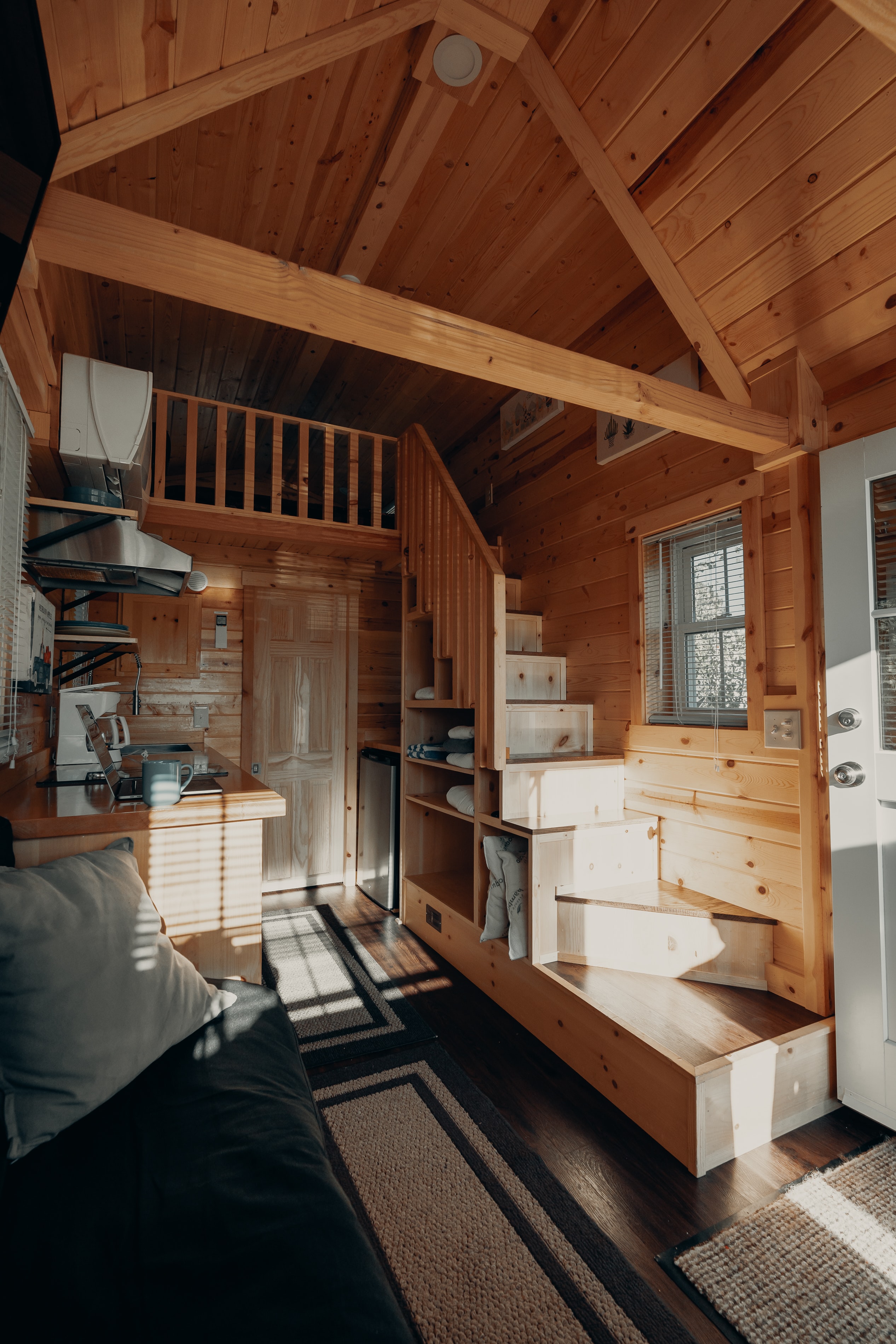
I love tiny houses. I think they’re adorable, clever, creative, and bold…and I admire those brave enough to choose the tiny house lifestyle. While environmental sustainability is an admirable draw, I think the tiny house movement really represents individuality and freedom.


Tiny houses are customizable to the unique lifestyle and personality of the homeowner. If you love to cook, then invest in a bigger kitchen. Like to entertain? Add a rooftop deck and modular furniture. They can be smaller and easily mobile or larger and mostly stationary. Tired of packing your suitcase? Leave the suitcase behind and take your whole home on the road.


Tiny houses are a great example of living the Enough Life. Just like the Enough Life, tiny houses are not about sacrificing, they’re about optimizing. It isn’t about giving up space, it’s about gaining what’s truly important to the owner. What the homeowners choose to give up in terms of the tangible square footage they more than make up for in the intangible benefits – less stress, more freedom. Tiny houses allow the owner to have more of the freedom they truly value – financial freedom, freedom to move about the country or stay put, freedom to customize.


I’m not suggesting that tiny house living would work for everyone, but the principle remains for all of us to consider: What is the intangible cost of the tangible items that make up your current lifestyle? Is there any material thing in your life that costs you more to maintain than the benefits you receive? If so, consider downsizing that one thing.


Minimalism is OK, but it isn’t ENOUGH! (Post #15)

There is a big distinction between minimalism and living the Enough Life. Allow me to elaborate. 

I understand where minimalism is coming from, I myself even embraced it for a time. The idea is good. Most of us could use a bit of decluttering and less consumption is generally good. Yet, the movement has really become distressing to me. The problem I have with the minimalist movement is that it carries a connotation of limiting, of rules, of getting by with less, of holding back. Of scarcity. In the world of minimalism there seems to be an ongoing burden on your back. There is always a mountain to climb, another closet to go through, vigilance needed at every turn. And I believe that creates a “you have to work for it” mentality which ultimately produces shame because one cannot really ever be a perfect minimalist. And it seems as though those who are live an uncomfortable lifestyle, for which they must remain ever vigilant.

While listening to a popular minimalism podcast, it also occurred to me that minimalism is exactly like hoarding. Now before you laugh and walk away, hear me out. Minimalism perpetuates the same fixation with “stuff” that hoarding does. They are two sides of the same coin. On one side, hoarding is fixated on things, namely trying to fill a void in one’s life through accumulating things. On the other side, minimalism is also fixated on things, namely trying to fill a void in one’s life by controlling their collection of things. Sure, minimalism may appear a more noble endeavor, but I’m convinced that the root of minimalism can be as insidious as hoarding and ultimately as unkind to your soul.

The ‘things’ of life are only a part of this life, they should not be our focus. In fact, the most important things in life are not things at all.

By contrast, the Enough Life is about getting by with MORE! More joy, more satisfaction, more relief from the shame and woulda, coulda, shoulda of life! This Enough Life is freedom. It is not a hill to climb, it’s a beautiful wide open space filled with all of your favorite loves. There is no guilt in this Enough Life, and everyone’s enough is unique. Everyone gets to be who they are and decide for themselves – based on their level of peace and joy – what is enough for them.

Sometimes minimalism is referred to as a lifestyle, but it seems to me that it is really more of a ritual. In contrast, this Enough Life really is a lifestyle…which takes no effort. It is a way of thinking and approaching all of life, to get the most out of it. It isn’t about controlling life, it is about embracing life.

The Enough Life is not about taking things out of your life, its about filling your life (and home) with that which really satisfies. Not counterfeit satisfaction, real satisfaction. Real peace. Real joy. It isn’t about limiting, it is about maximizing that which truly matters and removing that which doesn’t. And the Enough Life is not limited to things, it transcends the material goods of life and actually applies to all areas of life based on what is kind to your soul and what is life-giving and peace-inducing. 

Try it….and be kind to your soul today!


Cutting Wedding Cake

Who ever said “Nothing But The Best Will Do”? (Post #14)

Have you ever met someone who always seems to think they need the newest and best of everything? I mean, they won’t take something that would perfectly meet their need unless it is also the top of the line…even if their budget won’t support the top of the line? Perhaps you are someone like that. Have you ever wondered why?

Now, don’t get me wrong, I like nice things. I just don’t believe that nice things – or even the best things – equal the most expensive things. Marketers work very hard to convince us that the higher price means better, but price does not equal the value the consumer receives. Marketers have trained most people to think that the higher the price the more identity-benefit in owning it. And, most people believe this without even thinking about it.  

But where does the idea come from that we need the top of the line? Does a material possession that will ultimately decay, break, or become obsolete really impact our self-worth? Does our wanting the top of the line come from a true need or are we compensating for something? 

I was recently reminded of this issue while helping a someone make a significant decision. Despite not having the financial resources or the need, this person’s stance was ‘the top of the line or nothing,’ even when there was more than a $10,000 difference between the options and a lower option would meet her need every bit as much as the top of the line without burying her in debt.

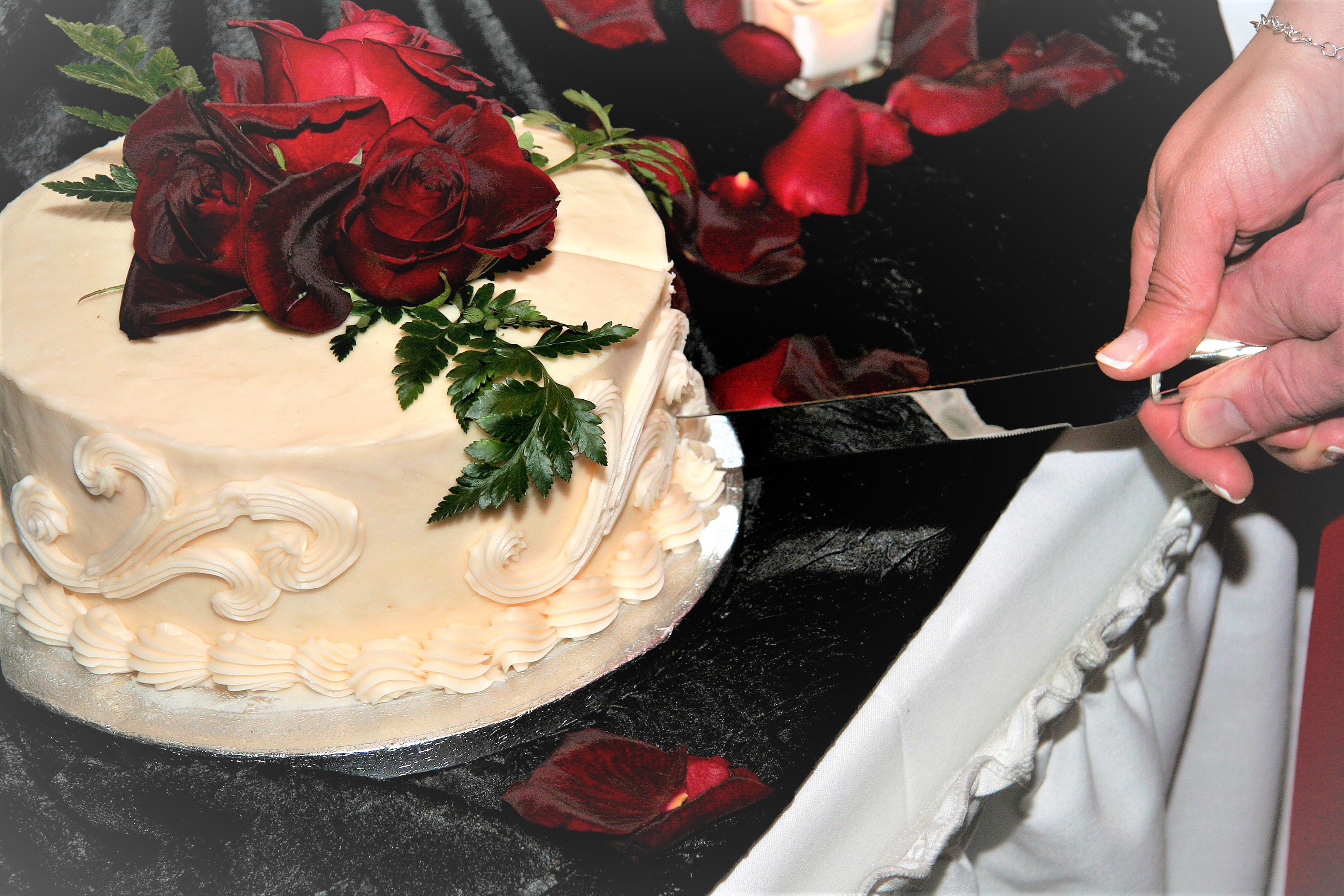
It made me think of my wedding day. It was a glorious day, perfect weather for the early spring date, and everything went according to plan. It was perfect, right down to the last slice of cake and glorious rose petal. When my husband and I were planning our wedding, we recognized that it was an incredibly important day, but it was just one day. We were both working professionals and while we didn’t have a lot in savings, we knew we could reasonably afford whatever we wanted the day to be. We talked about what was most important and where we thought it was best to spend a little more and where we could save a little money. We discovered areas where spending more to get the higher priced item wouldn’t actually add any more value to the day or our memory of it, so we decided to scale the spending back on those items…same bang (benefit) for less bucks. I will say that this is completely subjective, and our list would not necessarily be your list, but I’m sure we each have elements of our special day that were more meaningful than others.

For example, we splurged on flowers. I love roses and wanted nothing but red and white roses. I think our flowers were the most spectacular flowers I have ever seen (acknowledging that I may be biased).

We also have a love of music. My husband is especially fond of the violin and classical music. I love old churches and we found the perfect old beautiful chapel with a massive pipe organ. So we splurged on musicians. We hired an organist who knew how to work magic on those old pipes. We also hired two violinists, a cellist and a professional trumpet player. It was spectacular! Over a decade later I still have people tell me that the music sends chills down their spine when they think of our wedding. My intro was grand and glorious with the trumpet announcing my arrival, and then the others joining in. Ya’ll, the recessional was to Trumpet Voluntary…TRUMPET VOLUNTARY!!! 

While we decided that the flowers and the music were our most important items, we also decided that the cake was not so important to us. Oh sure, we wanted to feed delicious cake to our guests, we just didn’t want to feed $900 cake to our guests. Despite my mother’s protest, I canceled the appointment with the trendy bakery and took a picture to my local supermarket bakery counter. I wanted classic, elegant, and delicious, but I was convinced I could do it for a reasonable price. In the end, I spent $97 for three sheet cakes and three 9″ two-tier cakes with a classic scroll design to decorate with red roses and place on the cake table. DONE! And, all night people commented that the cake was so delicious. 

We made trade offs, taking a “lower model” in some areas and going “top of the line” in other areas, to suit our specific dreams for the day. We prioritized our spending to ensure we focused on that which was really important, and did not mortgage our future with wedding debt to cover added expenses that delivered no added value for us. 

So, the next time you are looking for the top of the line, ask yourself these questions to determine if the investment, and the trade off, is really worth it:

  1. What is the need or problem I am trying to solve with this purchase?
  2. What features does the top of the line have that the other models don’t? Do I need those features?
  3. What model most closely matches the actual need/use I have for this item? Does the need truly merit the most expensive item?
  4. Will a more expensive model really give me the added value?
  5. What is the opportunity cost of buying the more expensive item? In other words, what am I giving up by choosing the more expensive item and is the trade-off worth it? (Really think about this, you may be surprised at the tangible and intangible costs…more time at work; loss of peace due to more debt; additional interest payments beyond the base price; additional time and expense in maintenance and upkeep; fear of loss or damage; unnecessarily decreasing your savings and therefore your financial safety net; inability to purchase something else needed more?)
  6. Would selecting a different model be a challenge to your identity somehow? If so, ask yourself why?

In case you haven’t heard this before, I will tell you now. You are more than your material possessions. You are more valuable than all the riches Elon Musk could ever accumulate. You don’t need the top of the line to be special. You are already special to the One who made you!

You are already ENOUGH!


The Enough Life Essence (Post #8)

Let’s talk about the real essence of this thing I call, The Enough Life. The Enough Life should not be confused with minimalism, it isn’t about minimalism. It isn’t about excess. It isn’t about feeling guilty for what you have or straining and striving for what you think you lack. It isn’t about settling for less or feeling pious for going without. It is all about getting to the heart of what you truly desire.

A place of enough is unique to each person, and unique to each area of life. There is no formula or 3-step process. It isn’t a cookie cutter approach designed to make us all the same or to create a standard marker for success. It’s individual and customizable. A unique and beautiful expression of who you truly are. The Enough Life is all about finding that place of optimal peace, joy, and satisfaction in every area of life. It’s about putting aside what the culture around you considers success and living out your own definition.

You see, I believe enough is the sweet spot in life. As if there is a continuum, or a scale, weighing the options. The idea is to achieve the perfect balance. Too little, and the scale tips to one side. Too much, and the scale tips to the other. The goal is just the right balance. That is the place of optimal peace, joy, and satisfaction.

One easy example that I was reminded of this spring is gardening. I love flowers but I don’t love to garden. I love they way they look and smell, but I hate having to water them. Enough flowers for me is just what will fit in the window boxes on my porch. A few pretty flowers, a small basil plant, a small mint plant, and a small cilantro plant. I enjoy sitting on my porch and seeing them. They put a smile on my face every time I pull into my driveway. I have fresh herbs for my salads and iced tea. And one full watering can will last me 3 days. That’s my sweet spot. The perfect amount of pleasure and effort…I am satisfied, I experience great joy, and I have peace in my heart. That is enough for me.

In contrast, my neighbor loves all things horticulture and has several horticulture degrees. He and his wife not only enjoy the flowers but they enjoy all of the aspects of taking care of the plants. So, while I have two tiny window boxes, they have dozens of pots of flowers all over their front porch, back deck, and patio. It is beautiful, truly beautiful. I am so glad that I can see them from my home, but I am also so glad that I don’t have to take care of them. Simply the thought of it exhausts me. All of that watering and weeding, especially in the hot, humid summer weather, would not be enjoyable for me. The plants would end up looking terrible, I would feel like a bad human for not keeping up (carrying around the woulda, coulda, shoulda baggage), and the chores would add stress to my life. But this is their perfect enough. It brings them peace and joy. Caring for the plants is not a burden at all. In fact, they get great satisfaction from both enjoying the beauty of the plants as well as caring for them.

You see, one persons enough may be someone else’s way too much (or way too little). Enough is not about judgement. Enough is not a one-size-fits-all approach. It is customizable to the needs and satisfaction of each person. Enough is the optimal place where peace, joy, and satisfaction intersect.