What’s on your Bucket List? (Post #18)

The new year is well under way and I trust we all managed to stay clear of those pesky New Year’s Resolutions – a list which leaves us with nearly certain regret. 

Today I would like to talk about a different kind of list, the Bucket List. As you likely know, the Bucket List represents goals for what one wants to see or do before ‘kicking the bucket.’ This phrase, which is a euphemism for death, may seem morbid but is actually most often used as a means of motivating one to live life to the fullest and as a reminder of how fleeting life may be. 

Bucket Lists include doing things like the following:

  • See the sunrise from the top of Diamond Head (ahem…note the featured picture, it was spectacular!)
  • Have dinner at a 5-star restaurant
  • Go on a missions trip
  • See an actual Broadway production
  • Experience the historic architecture of Paris, France
  • Climb Machu Picchu

The Bucket List is generally understood to represent our life accomplishments, our DOings. However, I can’t help but wonder if the Bucket List of our life experience is really the right approach. Oh, I think these items are okay, but does this list really represent our most coveted accomplishments? 

What about the deeper qualities of life? Shouldn’t there be a place, perhaps a list, of the character qualities we want to exhibit in our lives – who we really want to be? After all, we are not human doings, we are human BEings.

Now please hear me, I am not saying there is anything wrong with having a Bucket List. In fact, I have one myself. I’m just saying we maybe should add another list to our notebook, and maybe this list should take priority. 

Why do we have lists of activities we want to experience but rarely talk about the qualities of the person we want to be. Why do we invest time and energy yearning for places to visit and experiences to have, yet spend comparatively little time and energy on developing the person we want others to experience.

I always think it’s interesting to visit famous places and see little carvings or etchings of initials people have left behind. We humans instinctively want to leave our mark on the world. Even in these small ways, people want to leave evidence that they have existed, they were ‘here.’ We all want to leave a legacy. Yet our most profound opportunity to leave a mark on the world for all time and for future generations is to develop our character and sow into the lives of others.

I submit to you that our BEing in this life means more than the sum total of our DOing in this life. Our personal attributes, character and principles have a much greater impact on those around us than we may initially realize. Certainly our experiences impact who we are, but the mark our character and actions have on the world and those around us is a much more indelible mark than the scratch we could possibly leave on the places we visit.

So, I ask you, “Who do you want to BE?” What do you want people to say about you when you have kicked the proverbial bucket? This BE List may seem a lot less exciting, but it will yield a much better return on your investment of time and energy. It will most certainly be a more powerful legacy to leave those around you. When you pass from this earthly life, do you want people to just be glad you’re gone or do you want people to say that the world was a much better place because you were in it? 

Take some time today to start your BE List. I think I’ll revisit mine too!

The Secret Sauce (Post #17)

In today’s fast-paced, super-sized world, don’t we all just want to hit the easy button…you know, land that deal of a lifetime with virtually no effort, lose 10 pounds while you sleep, and create the perfect home life in 3 simple steps. Yet, we all know the old adage that if something seems too good to be true, it probably is.

The truth is, there is no easy button. Doing the right things well takes effort and intentionality. It always has. There are natural, universal laws at play – we reap what we sow. The farmer cannot reap a harvest of soy beans if she planted a crop of peas.

And so it begs the question: if we reap discontentment, what are we sowing. Or, to frame it another way, if we want to harvest a fully-satisfied, joy-filled life (otherwise known as The Enough Life), what should we be sowing? How can we be intentional about planting seeds of contentment, satisfaction, and joy in our lives? What can we do to focus our minds on our gratitude for what we have rather than ruminating on what we lack?

Here’s one suggestion – start a gratitude or blessing journal. Spend at least 1 minute at the start and end of your day in your journal. Write down what you are thankful for, the blessings in your life, and what gives you joy. Ponder these things in your heart, review them periodically, and keep writing. You will be amazed at the harvest you can reap with an investment just 1 or 2 minutes.

Enough gratitude…that just may be the secret sauce!


Minimalism is OK, but it isn’t ENOUGH! (Post #15)

There is a big distinction between minimalism and living the Enough Life. Allow me to elaborate. 

I understand where minimalism is coming from, I myself even embraced it for a time. The idea is good. Most of us could use a bit of decluttering and less consumption is generally good. Yet, the movement has really become distressing to me. The problem I have with the minimalist movement is that it carries a connotation of limiting, of rules, of getting by with less, of holding back. Of scarcity. In the world of minimalism there seems to be an ongoing burden on your back. There is always a mountain to climb, another closet to go through, vigilance needed at every turn. And I believe that creates a “you have to work for it” mentality which ultimately produces shame because one cannot really ever be a perfect minimalist. And it seems as though those who are live an uncomfortable lifestyle, for which they must remain ever vigilant.

While listening to a popular minimalism podcast, it also occurred to me that minimalism is exactly like hoarding. Now before you laugh and walk away, hear me out. Minimalism perpetuates the same fixation with “stuff” that hoarding does. They are two sides of the same coin. On one side, hoarding is fixated on things, namely trying to fill a void in one’s life through accumulating things. On the other side, minimalism is also fixated on things, namely trying to fill a void in one’s life by controlling their collection of things. Sure, minimalism may appear a more noble endeavor, but I’m convinced that the root of minimalism can be as insidious as hoarding and ultimately as unkind to your soul.

The ‘things’ of life are only a part of this life, they should not be our focus. In fact, the most important things in life are not things at all.

By contrast, the Enough Life is about getting by with MORE! More joy, more satisfaction, more relief from the shame and woulda, coulda, shoulda of life! This Enough Life is freedom. It is not a hill to climb, it’s a beautiful wide open space filled with all of your favorite loves. There is no guilt in this Enough Life, and everyone’s enough is unique. Everyone gets to be who they are and decide for themselves – based on their level of peace and joy – what is enough for them.

Sometimes minimalism is referred to as a lifestyle, but it seems to me that it is really more of a ritual. In contrast, this Enough Life really is a lifestyle…which takes no effort. It is a way of thinking and approaching all of life, to get the most out of it. It isn’t about controlling life, it is about embracing life.

The Enough Life is not about taking things out of your life, its about filling your life (and home) with that which really satisfies. Not counterfeit satisfaction, real satisfaction. Real peace. Real joy. It isn’t about limiting, it is about maximizing that which truly matters and removing that which doesn’t. And the Enough Life is not limited to things, it transcends the material goods of life and actually applies to all areas of life based on what is kind to your soul and what is life-giving and peace-inducing. 

Try it….and be kind to your soul today!


Cutting Wedding Cake

Who ever said “Nothing But The Best Will Do”? (Post #14)

Have you ever met someone who always seems to think they need the newest and best of everything? I mean, they won’t take something that would perfectly meet their need unless it is also the top of the line…even if their budget won’t support the top of the line? Perhaps you are someone like that. Have you ever wondered why?

Now, don’t get me wrong, I like nice things. I just don’t believe that nice things – or even the best things – equal the most expensive things. Marketers work very hard to convince us that the higher price means better, but price does not equal the value the consumer receives. Marketers have trained most people to think that the higher the price the more identity-benefit in owning it. And, most people believe this without even thinking about it.  

But where does the idea come from that we need the top of the line? Does a material possession that will ultimately decay, break, or become obsolete really impact our self-worth? Does our wanting the top of the line come from a true need or are we compensating for something? 

I was recently reminded of this issue while helping a someone make a significant decision. Despite not having the financial resources or the need, this person’s stance was ‘the top of the line or nothing,’ even when there was more than a $10,000 difference between the options and a lower option would meet her need every bit as much as the top of the line without burying her in debt.

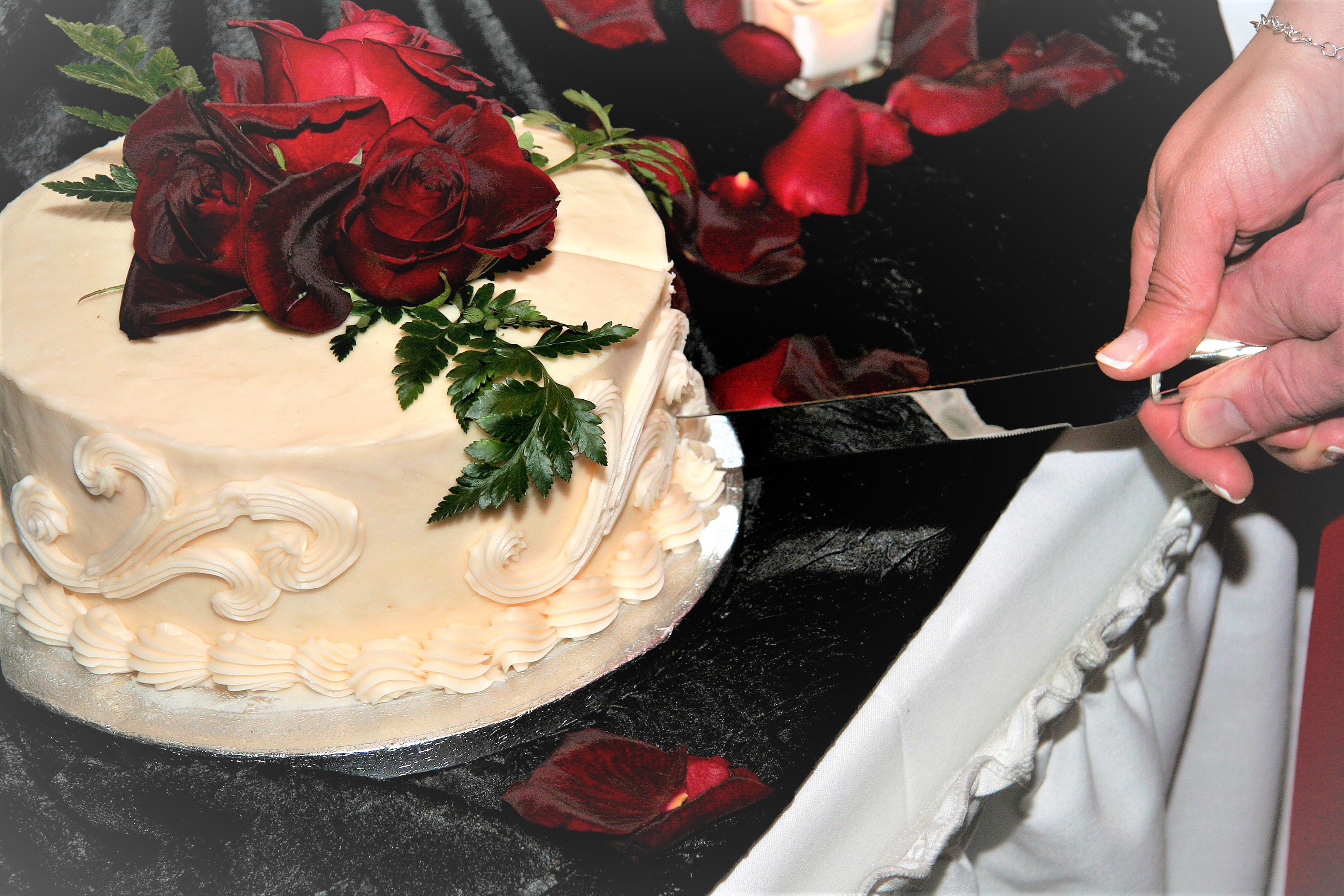
It made me think of my wedding day. It was a glorious day, perfect weather for the early spring date, and everything went according to plan. It was perfect, right down to the last slice of cake and glorious rose petal. When my husband and I were planning our wedding, we recognized that it was an incredibly important day, but it was just one day. We were both working professionals and while we didn’t have a lot in savings, we knew we could reasonably afford whatever we wanted the day to be. We talked about what was most important and where we thought it was best to spend a little more and where we could save a little money. We discovered areas where spending more to get the higher priced item wouldn’t actually add any more value to the day or our memory of it, so we decided to scale the spending back on those items…same bang (benefit) for less bucks. I will say that this is completely subjective, and our list would not necessarily be your list, but I’m sure we each have elements of our special day that were more meaningful than others.

For example, we splurged on flowers. I love roses and wanted nothing but red and white roses. I think our flowers were the most spectacular flowers I have ever seen (acknowledging that I may be biased).

We also have a love of music. My husband is especially fond of the violin and classical music. I love old churches and we found the perfect old beautiful chapel with a massive pipe organ. So we splurged on musicians. We hired an organist who knew how to work magic on those old pipes. We also hired two violinists, a cellist and a professional trumpet player. It was spectacular! Over a decade later I still have people tell me that the music sends chills down their spine when they think of our wedding. My intro was grand and glorious with the trumpet announcing my arrival, and then the others joining in. Ya’ll, the recessional was to Trumpet Voluntary…TRUMPET VOLUNTARY!!! 

While we decided that the flowers and the music were our most important items, we also decided that the cake was not so important to us. Oh sure, we wanted to feed delicious cake to our guests, we just didn’t want to feed $900 cake to our guests. Despite my mother’s protest, I canceled the appointment with the trendy bakery and took a picture to my local supermarket bakery counter. I wanted classic, elegant, and delicious, but I was convinced I could do it for a reasonable price. In the end, I spent $97 for three sheet cakes and three 9″ two-tier cakes with a classic scroll design to decorate with red roses and place on the cake table. DONE! And, all night people commented that the cake was so delicious. 

We made trade offs, taking a “lower model” in some areas and going “top of the line” in other areas, to suit our specific dreams for the day. We prioritized our spending to ensure we focused on that which was really important, and did not mortgage our future with wedding debt to cover added expenses that delivered no added value for us. 

So, the next time you are looking for the top of the line, ask yourself these questions to determine if the investment, and the trade off, is really worth it:

  1. What is the need or problem I am trying to solve with this purchase?
  2. What features does the top of the line have that the other models don’t? Do I need those features?
  3. What model most closely matches the actual need/use I have for this item? Does the need truly merit the most expensive item?
  4. Will a more expensive model really give me the added value?
  5. What is the opportunity cost of buying the more expensive item? In other words, what am I giving up by choosing the more expensive item and is the trade-off worth it? (Really think about this, you may be surprised at the tangible and intangible costs…more time at work; loss of peace due to more debt; additional interest payments beyond the base price; additional time and expense in maintenance and upkeep; fear of loss or damage; unnecessarily decreasing your savings and therefore your financial safety net; inability to purchase something else needed more?)
  6. Would selecting a different model be a challenge to your identity somehow? If so, ask yourself why?

In case you haven’t heard this before, I will tell you now. You are more than your material possessions. You are more valuable than all the riches Elon Musk could ever accumulate. You don’t need the top of the line to be special. You are already special to the One who made you!

You are already ENOUGH!


What Is Enough? (Post #13)

How do you define enough? I mean how do YOU define enough? Have you had enough? How would you know? What I do know is that too little is not enough and too much is more than enough.

Dictionary.com defines “enough” as: “adequate for the want or need; sufficient for the purpose or to satisfy desire”

You see I believe there is a continuum with too little on one end and too much on the other, and enough right in the middle: too little – enough – too much.

I have spent most of my life striving and straining for the next “thing”, only to run right past the point of enough to the point of exhaustion. We strive and strain and worry in order to find enough, but we end up with more than enough – we end up with excess. We pass right by enough and don’t even notice it. We think that when we get more we will feel satisfied. Yet, when we get to too much we still aren’t satisfied.

How can this be? Since too much is past enough, then wouldn’t that be more than the amount needed to satisfy…like super-satisfy? Yet, it isn’t satisfying at all. Do we shoot right past fully satisfied to unsatisfied? It sure seems like it.

Perhaps the continuum ought to be: unsatisfied – enough – unsatisfied. Could it be that the only place of full, true satisfaction and joy isn’t more and more, it’s just enough?