So That… (#34)

I love that little phrase, “so that”. It’s a short transition statement that packs a big punch. Have you ever thought about it?

The phrase “so that” is used to convey purpose, to clarify the why of something.

In the last post I mentioned that I recently made a big career move. That move was based on my so that.

I have had a pretty interesting career path, from correctional officer to CFO, from contracts manager to Vice President – I made a few moves, accepted several promotions, and held executive positions of influence and responsibility. I’ve worked with incredible people, viewed the political sausage-making up close and have had experiences most people are never afforded. It’s been a good run. Yet, the years of working 70+ hours a week in demanding, high-stress positions have, at times, taken a toll on my health and relationships, and stole way too much of my precious time and focus.

Perhaps approaching my 50th year of life also had something to do with it? I felt that it was time and the right opportunity came along. So, I took my own advice, evaluated my personal definition of success (see blog post #22), and moved in another direction. I am now the executive director at an amazing church…and I love it! I’m using my talents and skills to more directly further the kingdom of God. What the world may think I “lost” in terms of pay and fancy titles I “gained” in purpose, satisfaction, and time for family and my other purpose-filled interests – like this blog, book writing and launching a new website (coming soon!). I definitely made a quality trade.

All SO THAT I can fulfill my purpose.

We all need to know our purpose. Our purpose is like a compass that helps us find our way when we’re lost. Losing sight of your purpose can lead to unnecessary hopelessness and despair. We were never meant to live in hopelessness and despair.

Someone I care deeply about recently took his own life. It is a tragic, senseless, and devastating loss. He fell into despair…he lost his so that.

Every life was created intentionally by God on purpose and for a purpose. We all have a so that.

What is the so that in your life? What is that purpose in your life that drives everything else? If you’re not sure, spend some time this week to think about it. You DO have one, and we all need you to see it through!


Enough Work Satisfaction (#33)

I mentioned in the last post that I left my company after 25 years. I didn’t exactly retire – still a bit too young for that – but I decided to make a major change nonetheless. I downsized my paycheck (substantially) and upgraded my life. And I’ve never been happier!

I was not expecting this move at all – but when the Lord led me to this new opportunity, I lost all fear and embraced the joy and satisfaction of this Enough Life change. I know this seems quite contrary to the traditional American ideological path to happiness – climb the ladder, increase your income, buy toys and other symbols of supposed success. But, as we have explored in other posts, there is a point of diminishing returns where the striving actually leads to emptiness, burnout, and a lack of satisfaction.

True satisfaction does not come from things (toys, income, or prestigious titles). One need only look at the tragic deaths of Kate Spade, Robin Williams, Marilyn Monroe, and Anthony Bourdain (to name just a few) to realize that money, fame, and toys do not create a satisfied life. In the Biblical book of Ecclesiastes, king Solomon wrote, “I had everything a man could desire! …I denied myself no pleasure. I even found great pleasure in hard work, a reward for all my labors. But as I looked at everything I had worked so hard to accomplish, it was all so meaningless – like chasing the wind. There was nothing really worthwhile anywhere.” (Ecclesiastes 2:8b-11 NLT)

I had been on that path for many years, and I had achieved much in the eyes of the world. Yet, I realized over the last few years that the higher paycheck came with an increasingly costly personal price tag. I was paying a high price in some very real ways to maintain the salary. I was working nearly all the time, I was pouring myself into work that seemed eternally futile, and I was too often neglecting friends and family in order to meet the relentless demands of my work. I earned a nice salary but was too distracted and exhausted to enjoy it. Much of the time I was unhappy and unfulfilled in my work life. It turns out that this move was the next logical step in my own Enough Life journey. The new position is a much better alignment for me in many ways:

  • Values alignment – organizational values matching my personal values and beliefs
  • Lifestyle alignment – proximity to home, less commute time, less stress, fewer hours, less expense, less “P” politics
  • Goal alignment – my life’s purpose along with the organization’s purpose

In the Book of Ecclesiastes, king Solomon concluded, “So I decided there is nothing better than to enjoy food and drink and to find satisfaction in work. Then I realized these pleasures are from the hand of God.” (Ecclesiastes 2:24 NLT) We find true vocational satisfaction when the mission of the organization is in alignment with our personal values and world view, and when we can use our skills to fill a critical organizational need. This truly is a blessing from above!

This week:

If your current work is not a good alignment for you, what are some other ways you can create alignment and increase satisfaction in life? Are there organizations with which you do have alignment and to which you could volunteer? Are there professional groups in alignment with your values/world view to which you could participate? Where could you find satisfaction that you are making a difference in the areas most meaningful to you?


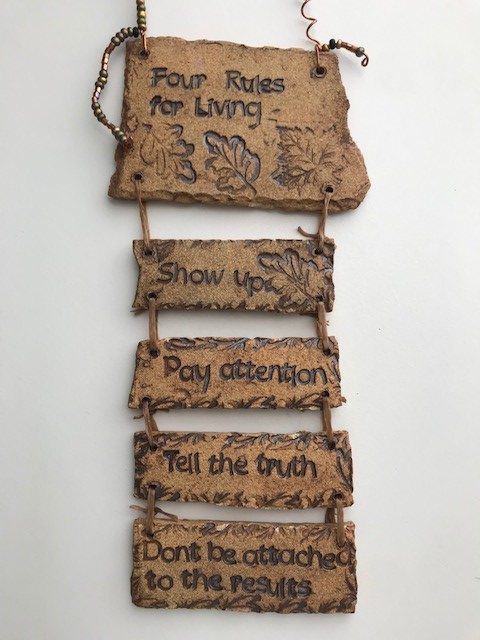
Four Rules for Living: Show Up, Pay Attention, Tell the Truth, Don't Be Attached to the Results.

The Circle Of (Work) Life…Moving On (#32)

I’m making a big transition. After 25 years, with the same “company” I’m moving on. And it’s a lot harder than one might think. When the leader leaves it can be a tricky thing for both the leader and those left behind. Today, we will focus on the leader.

Leaving isn’t easy, even when it is for the right reason and on good terms. I pour a lot into my work and give a lot of discretionary effort because there are always worthy challenges to solve. But, I now must place all of my hard work and organizational accomplishments in the hands of my successor and step away. It is out of my hands now. As I was divesting from all of the projects and responsibilities, I couldn’t help but wonder if it was worth it.

The famous Jewish King, Solomon, similarly reflected upon the value of work by saying:

 “I hated all the things I had toiled for under the sun, because I must leave them to the one who comes after me. And who knows whether that person will be wise or foolish? Yet they will have control over all the fruit of my toil into which I have poured my effort and skill under the sun. This too is meaningless. So, my heart began to despair over all my toilsome labor under the sun. For a person may labor with wisdom, knowledge and skill, and then they must leave all they own to another who has not toiled for it. This too is meaningless and a great misfortune.” (Ecclesiastes 2:18-21, NIV).

You may recall this is the same man who asked God for wisdom to lead people well and with integrity. (1 Kings 3:9). Many times I have prayed as Solomon did, asking God to help me lead well and for wisdom to solve the organizational problems I’ve faced. I have prayed for the strength to do what I believed was honest and right, even when I knew it would come with consequences.

As a leader you serve up (boss), across (colleagues and other departments), and you serve down (your direct reports and departments). The goodbyes and kind messages I received from those I serve both warmed my heart and broke it (in a good way!). Of course, the praise and appreciation from my direct supervisor, the president, felt good – really good – but the heartfelt notes from my team and colleagues are really my highest prize. Here are a few of examples of the notes I received from employees:

  • I have the utmost respect for you and all that you’ve done as our CFO. You have always supported me in [my time here] and I will always remember that – Thank You. I love listening to the stories that you bring up at our meetings because they illustrate the vast depth of knowledge that you have as a leader. The trust that you extend to me encourages me to do my best; you lead by example. May the next journey you embark on bring you much joy and happiness.
  • In 21 years this is my first e-mail to a departing executive, but you are such an amazing positive force that I would be remiss not to. I have enjoyed every encounter with you, whether in the mailroom, the hallway, or a conference table. Best of luck to you with everything. You brought so much to the [organization].
  • If your new opportunity doesn’t work out you should teach others how to be good managers, I know I will never again have such a good manager.

Similarly, colleagues sent wonderfully encouraging messages, such as: “You bring a level of competence, professionalism and polish to your work as CFO that was sorely needed, and will be sorely missed! I’m happy for you that you’re making this change, and sad to see you go. Thanks for your help and…work during your tenure as VP. You’ve been a great leader within our organization!”

These types of comments represent, in my opinion, the greatest reward – and evidence – of good leadership: the positive impact made on your team and your organization. I trust these and other message I received means I served them well, albeit imperfectly to be sure. I trust that I am leaving my team and the organization in a better place than they were before I arrived. And I firmly believe that when you positively impact people, your work can never be meaningless.

I have had a piece of pottery art hanging in my office for the better part of two decades, which reads:

Show up.

Pay attention.

Tell the truth.

Don’t be attached to the results.

For 25 years I showed up every day with my best whole self. I paid attention and took what I call proactive ownership over my area of responsibility (more on that in a future post), I led with integrity, told the truth and in the process made improvements. I supported my team and held them accountable for results. And now, I must do the hard work of letting go.

I wish my former team and colleagues well. I thank God for the opportunity to serve them and His purposes. And now I turn my gaze toward the next task to which God has called me. I will continue to pray that God gives me the wisdom to lead His people well, serve with integrity, and do what He has called me to accomplish in this generation. And I will leave the results – the outcome – up to Him.

This Week: Is there some result, some outcome, with which you are struggling? Spend some time thinking about what you really can control and what is honestly beyond your control. Focus on what you can do and do your best work. Then trust that you have done your part and let go of the results.



Enough Compassion? (#31)

I recently spent several hours in a hospital emergency room (I’m fine, by the way!). I dreaded it, but the triage nurse at my medical clinic, and my husband, demanded that I go. I hate ERs – the wait time is usually long and unpredictable, the price tag high, and my particular ailment didn’t seem acute enough to warrant this waste of time. My husband, however, was not going to let me off the hook. So, begrudgingly, I packed a bag of reading material, phone charging cable, my trusty laptop, some almonds and a bottle of water, and I headed to the hospital. It was already nearly 7 PM, so I braced myself for a long evening.

There were quite a few people waiting when I arrived, and more trickling in every few minutes. Not to mention the ambulance bay’s steady stream of arrivals with more acute patients. A beautifully colorful, albeit tragic, sea of hurting humanity. We were all clearly not having our best day. People were injured, sick, in pain, fatigued, and impatient. I overheard a bit here and there – a sports injury, a bad chemo reaction, a terrifying cough. The staff seemed to be working as expediently as possible, but still the wait time was long and some of the patient’s patience was short.

As I sat in the cramped waiting room, complete with the plexiglass barriers between each seat, I wondered about all of the stories in the room. Who were these people and what had happened to bring them here? I wondered about their childhood and their families. Due to COVID-19, most people were not allowed to have a visitor accompany them and I wondered if they felt alone. I wondered about their support system and if they would be okay. How did they get here, how would they get home? I wondered if they felt loved and if they knew Jesus.

By contrast, the staff were wonderful and professional. I realized that they have a unique position from which to see the very worst parts of the human condition. Though I’m sure they’ve seen it all, they approached each person and each case with such kindness and care. I was struck by the depth of compassion one would need in order to see so many people at their worst – day in and day out – and yet remain so gracious and kind.

It made me think that far too often we don’t extend enough genuine compassion to one another. I suspect we make assumptions about one another – and our ignorant paradigms are full of subtle accusations about what people deserve and what they did to warrant their conditions. I grieved at the thought.

Scripture says that when Jesus saw the crowds, He was filled with compassion because of all of their needs (Matthew 9: 36). Sitting there I realized that while I don’t know every story, Jesus does. And He loves them deeply. He created each one and knows them by name. While He would be the one qualified to rightly accuse and condemn, scripture also says that is not His purpose (John 3:17) and that in Him there is no condemnation (Romans 8:1).

So, since I had the time, I turned my attention to prayer – for both the incredibly compassionate workers and the hurting ones who needed them.

This week:

Consider areas in your life where you could be more compassionate. What paradigms or assumptions do you have about others, whom Jesus loves? Consider how you can be the compassionate hands, feet, and heart of Jesus to the hurting world around you.


Enough Risk? (#30)

Practically speaking, the business of life is all about managing risk. Whether managing a home, a multinational corporation, a small nonprofit, or the big business of government, managing risk effectively is the difference between success and colossal failure. Therefore, it stands to reason that a primary role of leadership is effective risk management.

Enterprise Risk Management (ERM) has become somewhat of a buzz word these days, but don’t let that intimidate you. ERM is simply a systematic process of identifying risks and recording your approach to managing them. A risk is nothing more than an event which could alter your ability to achieve your plans and is typically evaluated against your strategic objectives (such as your mission, vision, values, or goals). The term risk can carry a negative connotation, but in fact, many risks are positive. For example, the risk of the product launch being much more successful than we anticipate, causing inventory depletion. While somewhat subjective, a risk – or more specifically a risk score – is calculated as the product of the likelihood of an event happening and the level of impact of the event, should it occur. We each do this analysis routinely in our heads every day, at home and at work, Enterprise Risk Management is just the process of writing it down and tracking the risks over time.

The key to effectively managing risk and opportunity is to know your risk tolerance. In other words, what is the right level of risk for the organization? Some degree of risk is healthy, spurring growth and continuous improvement. I would call that Enough Risk, the right amount of risk to maintain a healthy balance within the organization. Too much risk is a drain on resources and could put the entire enterprise in jeopardy. Too little risk causes stagnation and stunts innovation. You need some risk, enough risk. Therefore, I prefer to call this process Enough Risk Management.

To find your Enough Risk Management point, follow these steps:

  1. Brainstorm your risks and write them down.
  2. Write out a brief definition of the risk.
  3. Develop an evaluation scale, with brief definitions for each number on the scale. (I like a whole number scale of 1-10 for both probability and impact.)
  4. Score each risk for both its probability of occurring and the impact it would have should it occur. (You would want to include key leaders and stakeholders in at least this part of the process, preferably the whole process.)
  5. Calculate the risk score by multiplying the probability score by the impact score.
  6. Determine your Risk Management Strategy for each risk. (See the Key Strategies below for more information.)
  7. Identify a Risk Steward for each risk.

There are basically four Key Strategies, or options, for managing risks:

  • Reduce it – Is there a reasonable way we could buy this risk down or minimize its impact? (An example is taking out insurance on your home or vehicle.)
  • Reassign it – Is there another person or entity who would better manage this risk?
  • Retire it – Is there a way to eliminate the risk altogether by rethinking the current state?
  • Reward it – Make a decision to accept the risk and reward those who steward it well.

Whether personal or corporate, identifying and managing risks are a part of everyday life. So, take time this week to start making a list of the risks in your personal life and organization. To help you take the next step, download the free Enough Risk Management Tool on the Resources page.